Dentsu Creative Challenge · 2nd place of 40 teams
Orange Hour
Spanish teenagers spend 8 hours 39 minutes a day on screens. Orange Hour is an app that helps them take one hour back, using habit science instead of shame or restriction.
- Result
- 2nd of 40 teams
- Brief
- Dentsu Creative Iberia × Universidad Europea
- My role
- Built the app, led research and planning
- Team
- With Aleksander Andresson
The problem
Most talk about teen screen time is about discipline and restriction, and it doesn't work. Apps are engineered to be compulsive, so this is a design problem rather than a willpower problem. We set out to answer it with better design.
The research
We ran two surveys: 13 young people aged 14 to 22, and 31 professors. Teachers overestimated how aware students were and underestimated social pressure. Students weren't unaware. They were resigned: they knew the hours were too high and saw no alternative their friends would accept.
Social norms drive usage more than addiction
Teens stayed online because disconnecting felt socially risky.
Restriction creates backlash
Students whose parents controlled their phone time showed more anxiety around their devices, not less usage.
Both groups preferred rewards
Positive mechanics beat restriction, monitoring or shame.
Doing it together lowers the cost
When screen-free time is shared, the social cost of disconnecting drops.
The idea
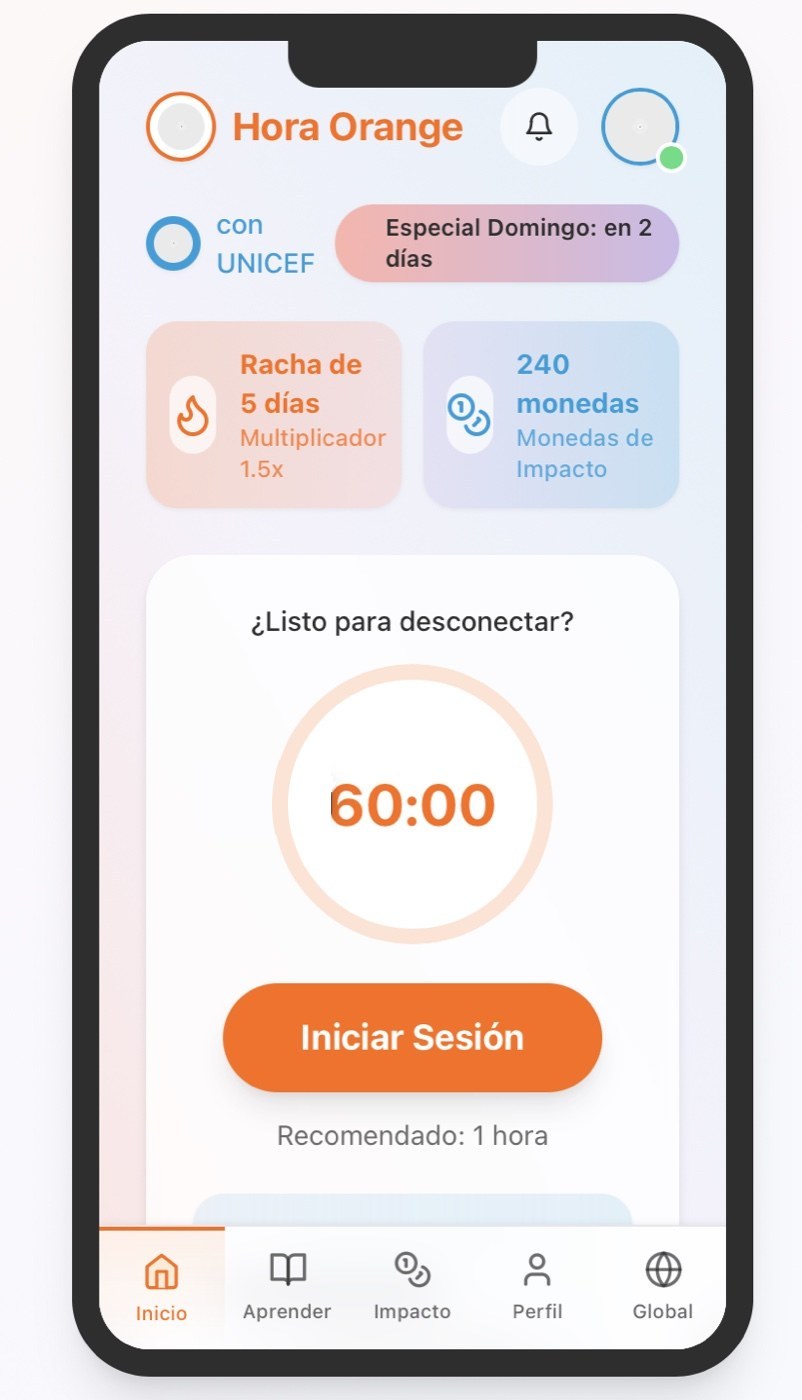
We used the four laws of behavior change from Atomic Habits as the design criteria for every feature. Each Sunday at 18:00, United Orange Hour disconnects everyone together, so nobody misses out.
Make it obvious: Daily Prompt
One specific invitation at the same time each day to start your Orange Hour.
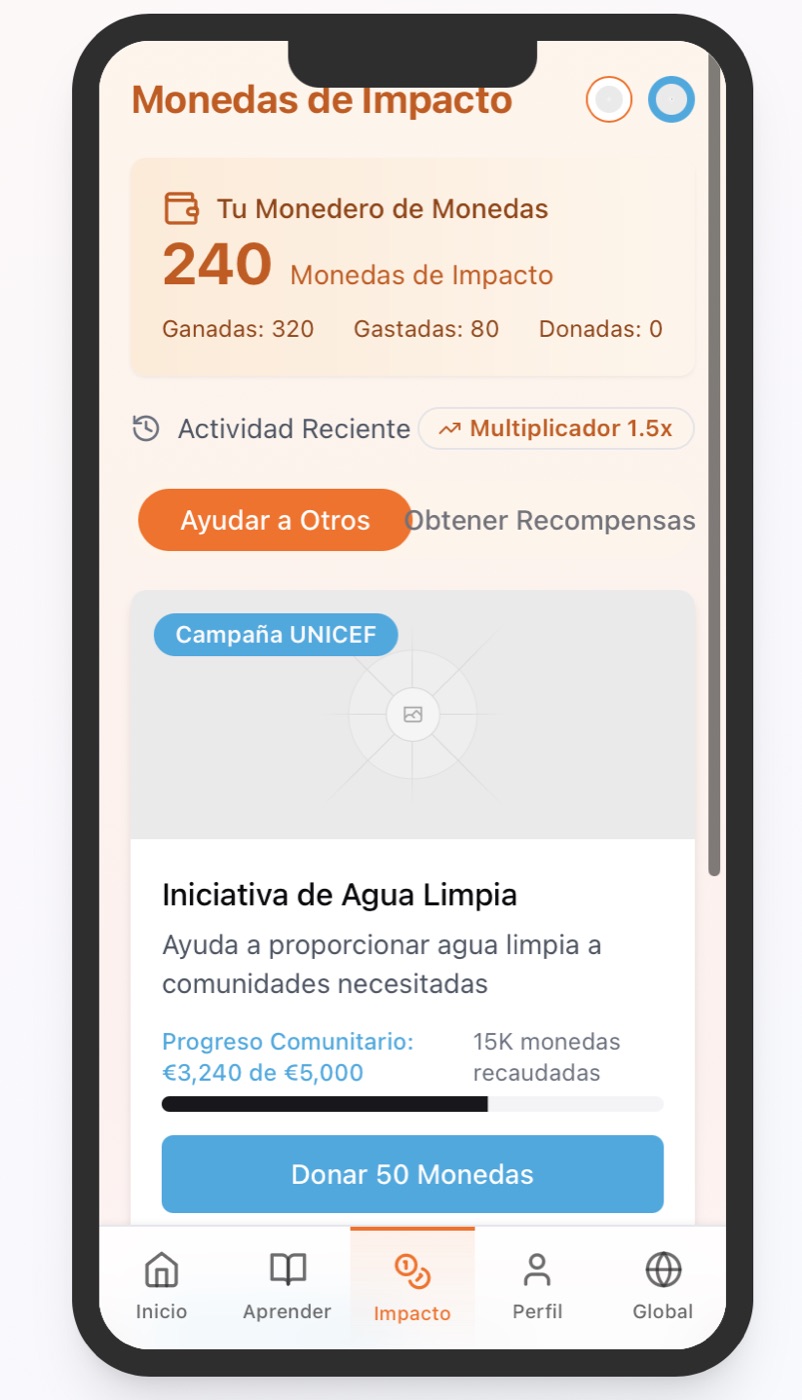
Make it attractive: Impact Coins
1 coin per offline minute, up to 60 a session, redeemable for rewards through brand partners.
Make it easy: Break Glass
One tap ends a session, with no penalty. Removing the shame of stopping makes people willing to start.
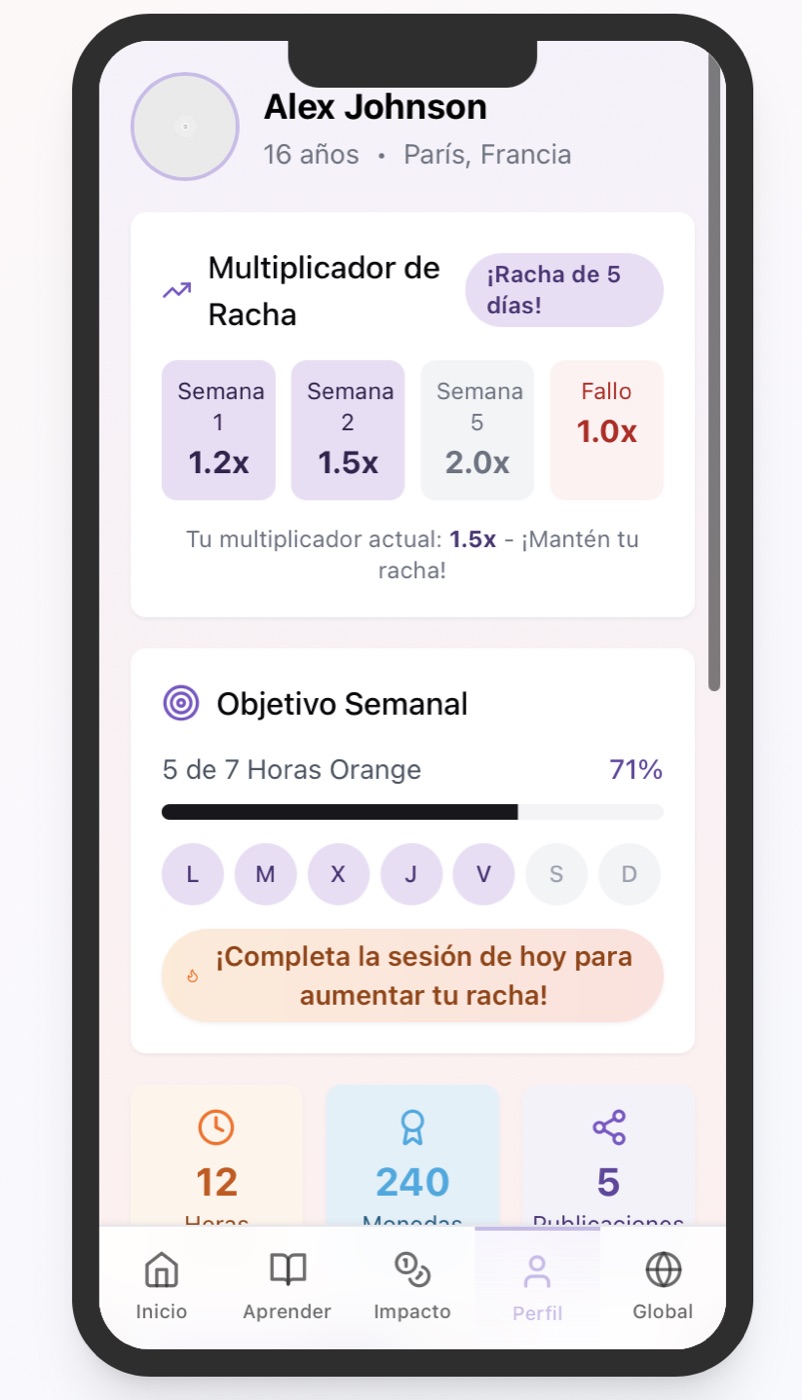
Make it satisfying: Streak Multipliers
Consecutive days build compounding rewards, so the habit reinforces itself.
Getting it noticed
Paid
Targeted YouTube, Instagram and TikTok ads built around the pause before you open an app.
Owned
Push notifications written as invitations rather than reminders, plus partner brand channels.
Earned
The Sunday session creates something to share afterwards: "This Sunday I did Orange Hour."
Building it changed the strategy
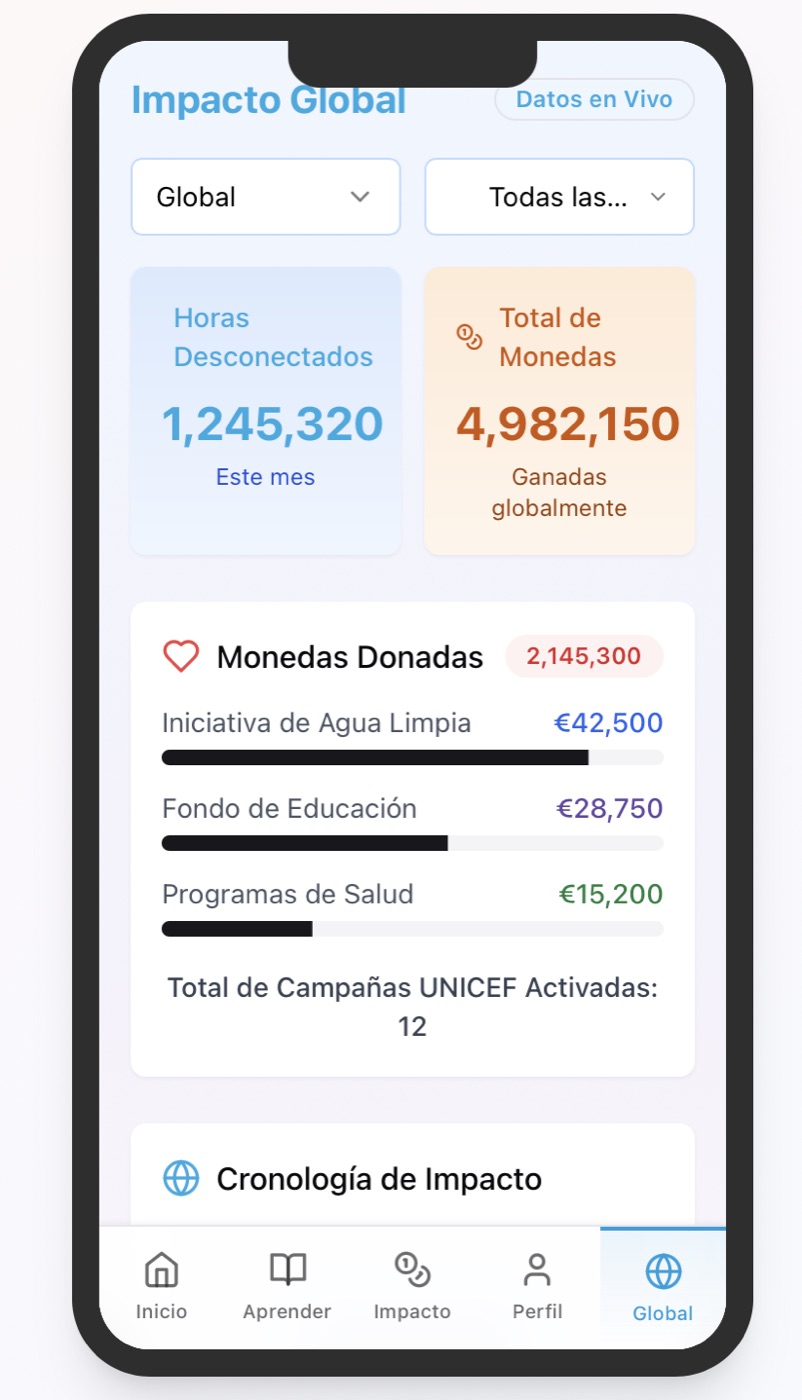
The prototype covers the dashboard, coins, streaks and the United Orange Hour screen. Seeing it work taught us something the slides could not: rewards felt abstract until the coins appeared on a redemption screen with real brand logos.
What I took from it
The second survey made the project. Without the professors, we would have solved a problem young people have. With them, we found the tension between two generations. I also learned that the strongest design decisions remove friction from the behavior you want, rather than adding motivation. Break Glass looks like a concession, and it is the feature that makes the rest work.